
 Pin It
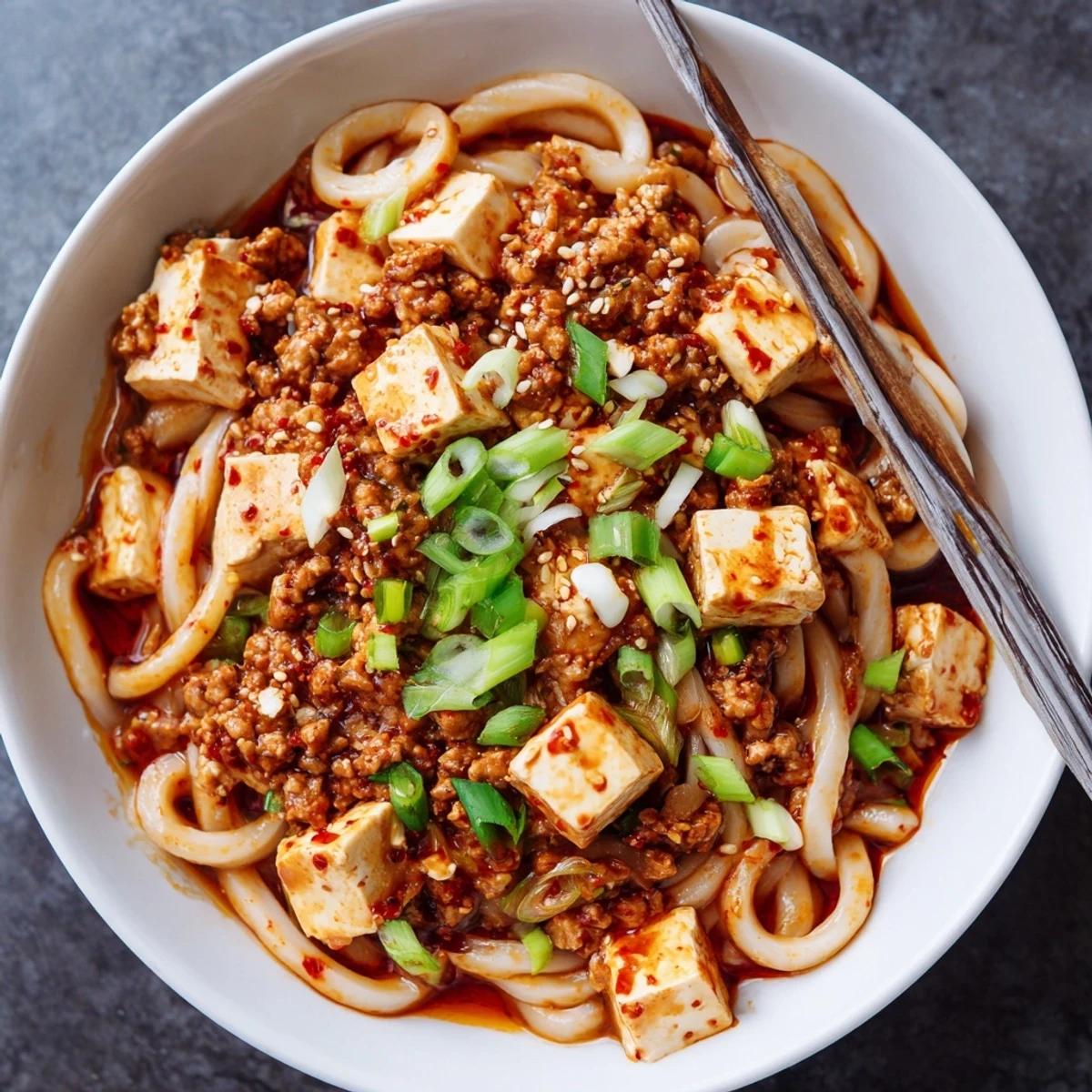
 This fusion dish brings together the bold heat of Sichuan cuisine with Japanese comfort food. Soft tofu cubes simmer in a fragrant sauce with aromatics like ginger, garlic, and Sichuan peppercorns, then get ladled over thick, chewy udon noodles. The spicy, umami-rich sauce clings to every strand while the tender tofu provides silky contrast. Perfect for weeknight dinners when you crave something satisfying with a kick.
My tiny apartment kitchen became an accidental chemistry lab the night I decided to marry Sichuan heat with Japanese comfort food. I'd just returned from a Tokyo trip with luggage full of fresh udon, but my cravings kept circling back to the numbing spice of mapo tofu I'd fallen in love with years earlier. The first attempt was chaotic, with sauce splattering everywhere and my poor roommates coughing from the toasted peppercorn fog. But that first messy bite, the way the thick sauce clung to those chewy noodles, made all the cleanup worth it.
Last winter, my friend Mei came over nursing a brutal breakup and demanding something that would make her feel alive again. We doubled the doubanjiang by accident because neither of us was paying attention to the measuring spoon, and we ended up gasping and laughing through the entire meal. She still texts me every time she makes it, claiming it's her emotional support food.
Ingredients
- Soft tofu: The delicate texture soaks up that fiery sauce beautifully, just dont treat it roughly when cubing
- Ground pork or plant-based mince: This creates those savory crumbles that make each forkful feel substantial and satisfying
- Fresh udon noodles: Their thick, chewy texture stands up perfectly to the bold sauce and wont get lost in all that flavor
- Sichuan peppercorns: Toasting these first releases their signature numbing magic, but remove them if you prefer less tingle on your tongue
- Doubanjiang: This fermented chili bean paste is the nonnegotiable soul of the dish, bringing depth, heat, and that gorgeous red color
- Cornstarch slurry: This transforms the broth into a silky, luxurious coating that hugs every strand of udon
Instructions
- Get your mise en place ready:
- Cube your tofu gently, mince the aromatics, and separate those spring onions before you turn on any heat
- Toast the peppercorns:
- Heat the oil until shimmering, add those crushed peppercorns for 30 seconds, then fish them out unless you love walking on the wild side
- Build your flavor base:
- Sauté the garlic, ginger, and white onion parts until your kitchen smells absolutely incredible
- Brown the protein:
- Crank up the heat, add your meat or mince, and break it into small crumbles until nicely browned
- Wake up the doubanjiang:
- Stir in that chili paste and let it cook until the oil turns a beautiful, ominous red
- Add the saucy elements:
- Pour in soy sauce, oyster sauce, wine, and sugar, letting everything bubble and get friendly together
- Introduce the tofu:
- Gently slide in those tender cubes with broth, then simmer and spoon sauce over them like you're tucking them in
- Create the silky finish:
- Stir in your cornstarch mixture and watch the sauce transform into glossy perfection
- Cook the udon separately:
- While the sauce thickens, boil your noodles until chewy and divide them into waiting bowls
- Bring it all together:
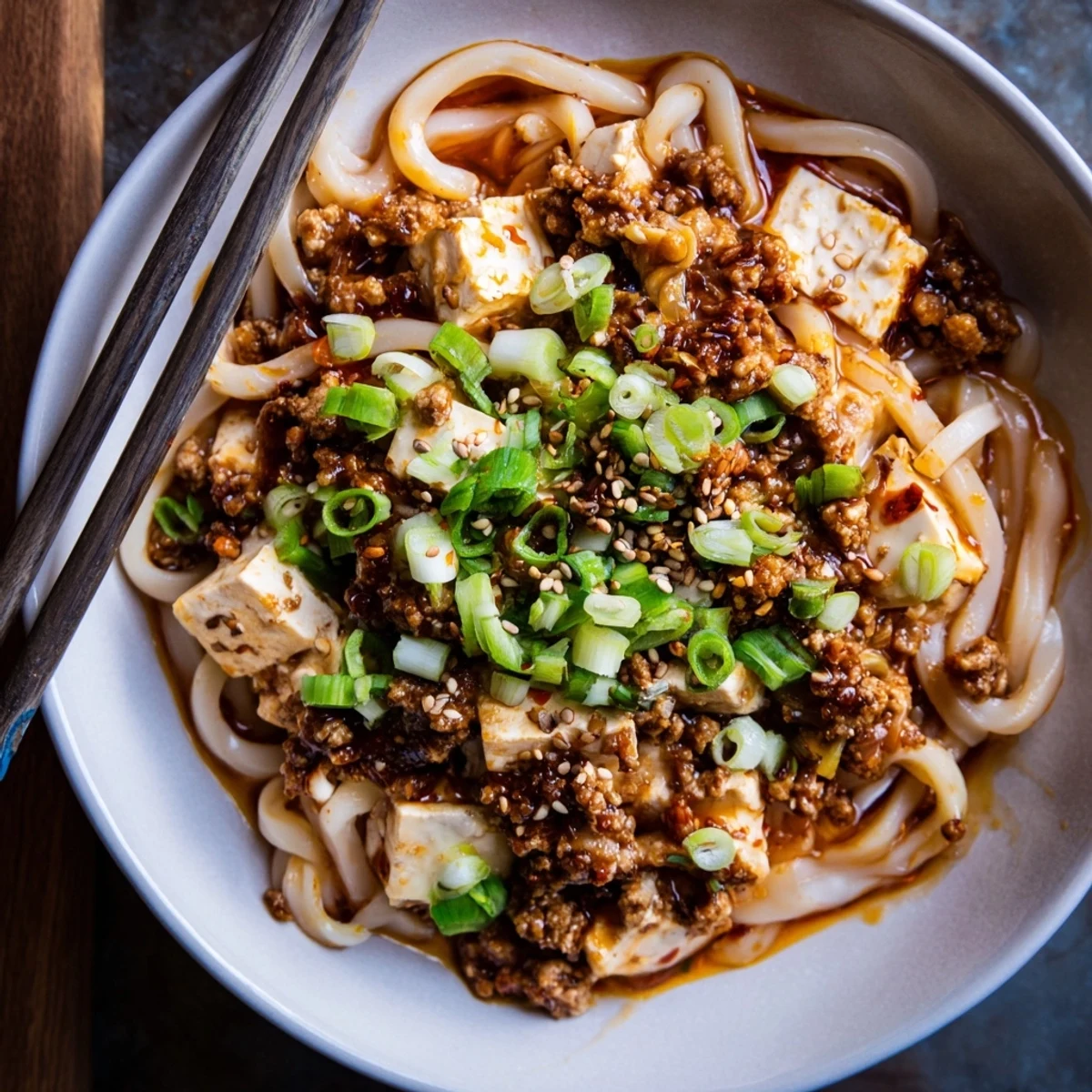
- Pour that glorious mapo tofu over the noodles and finish with green onions, sesame seeds, or extra chili oil if you're feeling bold
 Pin It
 My mom initially raised her eyebrows at this fusion idea, claiming it was culinary disrespect to two great traditions. Then she tasted it at my birthday dinner and asked for the recipe before she'd even finished her first bowl. Sometimes the best innovations come from being too hungry to follow rules.
Making It Vegetarian
Plant-based mince works shockingly well here, and I actually prefer the mushroom sauce version sometimes because it adds an earthy undertone that plays nicely with the peppercorns.
Noodle Swaps
I've made this with rice noodles, ramen, and even spaghetti in desperation. Udon remains the gold standard, but wide rice noodles come in a close second for texture.
Spice Control
Start with half the doubanjiang if you're spice-sensitive, and keep some plain yogurt or milk nearby as an emergency cooling system.
- The dish reheats beautifully but add a splash of water when warming it up
- Fried eggs on top turn this into an entirely different kind of heaven
- Crispy iceberg lettuce on the side provides the perfect refreshing contrast
 Pin It
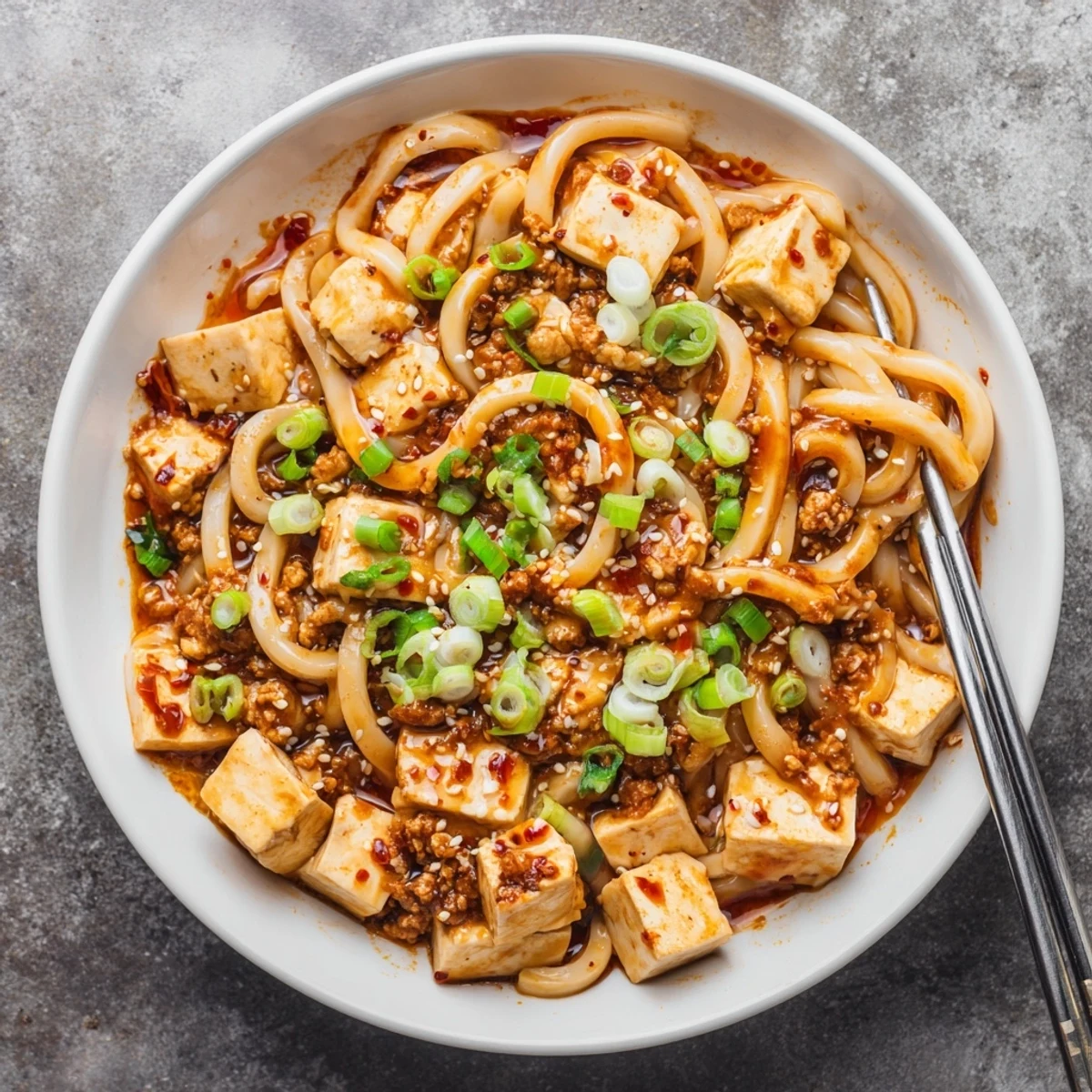
 This dish has fueled countless study sessions, breakup recoveries, and midnight kitchen dance parties. Hope it brings as much comfort to your table as it has to mine.
Recipe FAQs
- → Is mapo tofu udon very spicy?
-
The heat level is medium-spicy, adjustable based on how much doubanjiang (fermented chili paste) you use. The Sichuan peppercorns add tingling numbness rather than burning heat.
- → Can I make this vegetarian?
-
Yes, substitute ground pork with plant-based mince and use mushroom sauce instead of oyster sauce. The flavors remain rich and satisfying.
- → What type of tofu works best?
-
Soft or silken tofu works best for mapo tofu as it absorbs the spicy sauce beautifully and creates a silky texture in every bite.
- → How do I prevent udon noodles from sticking?
-
Drain noodles well and toss with a drop of oil after cooking. Serve immediately with the hot sauce to prevent sticking.
- → Can I prepare this ahead?
-
The mapo tofu sauce reheats beautifully. Cook noodles fresh just before serving for the best texture and consistency.
- → What drinks pair well?
-
A cold lager or light sake cuts through the spice beautifully. Iced tea or sparkling water also work well to balance the heat.
